
The White River Monster & Other Arkansas Legends Born on the Water
Every river carries stories. The White River carries more than most. It winds over 700 miles from the Boston Mountains to the Mississippi, and along the way it has gathered legends, characters, and a century of Arkansas history.
Some of those stories are tall tales. Some are true. The best ones sit somewhere in between. Here is the folklore that runs beneath the surface of the water you came to fish.
Meet Whitey, the White River Monster
Downstream from Cotter, near Newport, lives the most famous resident of the White River. His name is Whitey.
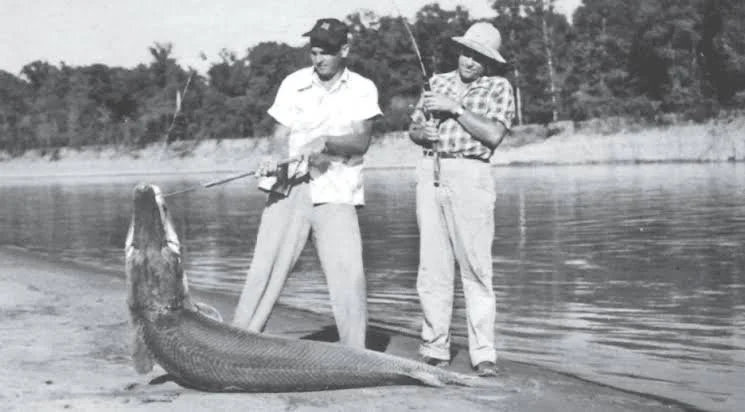
Watson, Tim, and Elizabeth Jacoway. Newport and Jackson County. Arcadia Publishing, 2016
The White River Monster has been part of Arkansas folklore for more than a century. Reported sightings stretch back to the early 1900s. Witnesses described a gray-skinned creature, some said as wide as a car and as long as three. Others swore it bellowed. Most of the reports came from fishermen and campers, which is either evidence or exactly what you'd expect.
“The state loved the legend enough to make it law.”
In 1973, the Arkansas State Legislature created the White River Monster Refuge, making it illegal to harm Whitey inside a protected stretch of river. He is, officially, a protected Arkansan.
Skeptics have offered explanations over the years. An elephant seal that wandered up the Mississippi. A giant alligator gar. An oversized catfish. A 220-pound gar pulled from the river in 1940 was paraded in front of a local meat market as the likely culprit. None of it has ever quite settled the matter, which is the whole point of a good legend.
Older Than the Town
Whitey was not the first water story told here.
Long before European settlers arrived, the Osage and Quapaw peoples who lived along the White River told of powerful river spirits and serpentine creatures that could overturn a canoe. Some of those tales likely served a practical purpose. They kept children away from the river's most dangerous water.
“The river has always commanded respect. The legends are just one of the ways people have shown it.”
The Town the Railroad Built
Cotter's own story reads like folklore, but it happened.
In 1902, this was open land on a horseshoe bend of the White River. Then the railroad came. The St. Louis, Iron Mountain & Southern chose this bend as a division point, and a town appeared almost overnight. Its grand opening drew an estimated 4,000 people to a place that barely had a population. Many early residents lived in a tent city along the river while the town took shape around them.
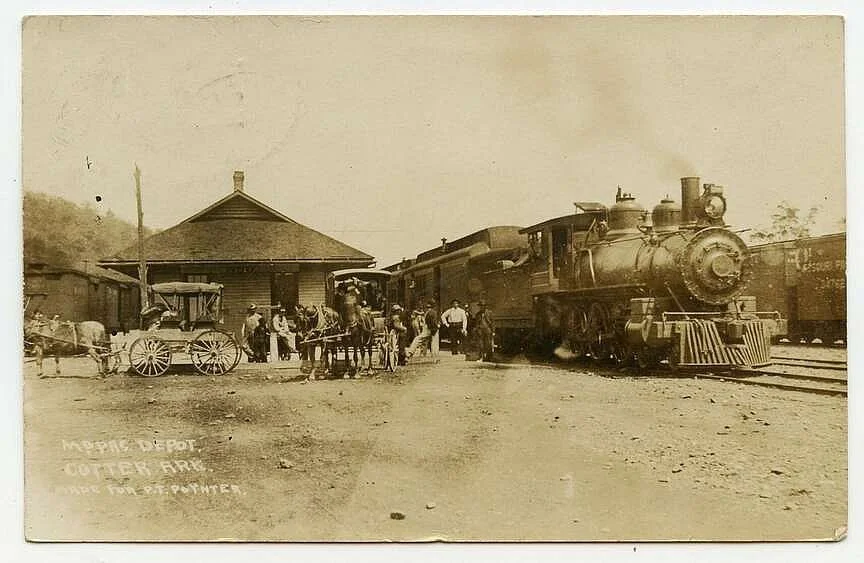
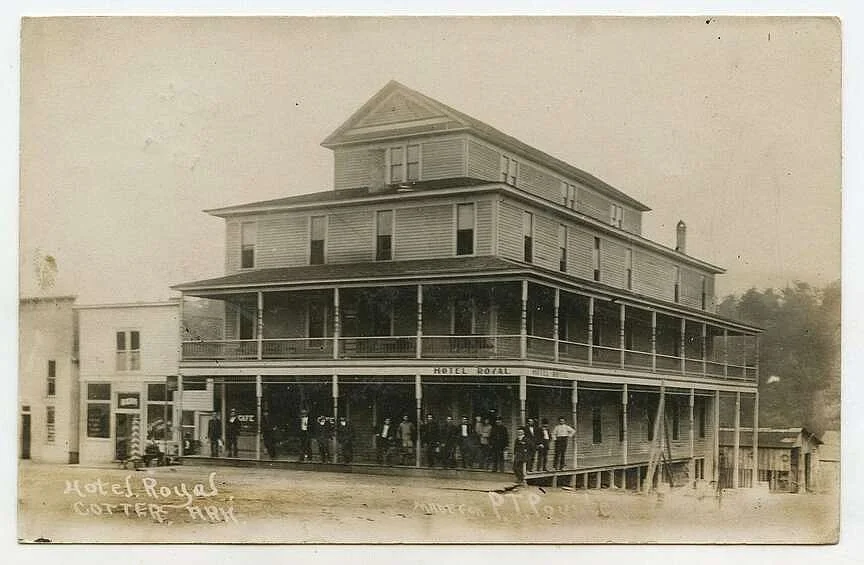
For decades, the trains defined Cotter. President Harry Truman rolled through by rail in 1952 on his way to dedicate Bull Shoals Dam. The last passenger train pulled out in 1960. That dam is the reason the water below it runs cold and clear today, and the reason the trout came at all.
The Rainbow Over the River
If you spend any time in Cotter, you will see the bridge.
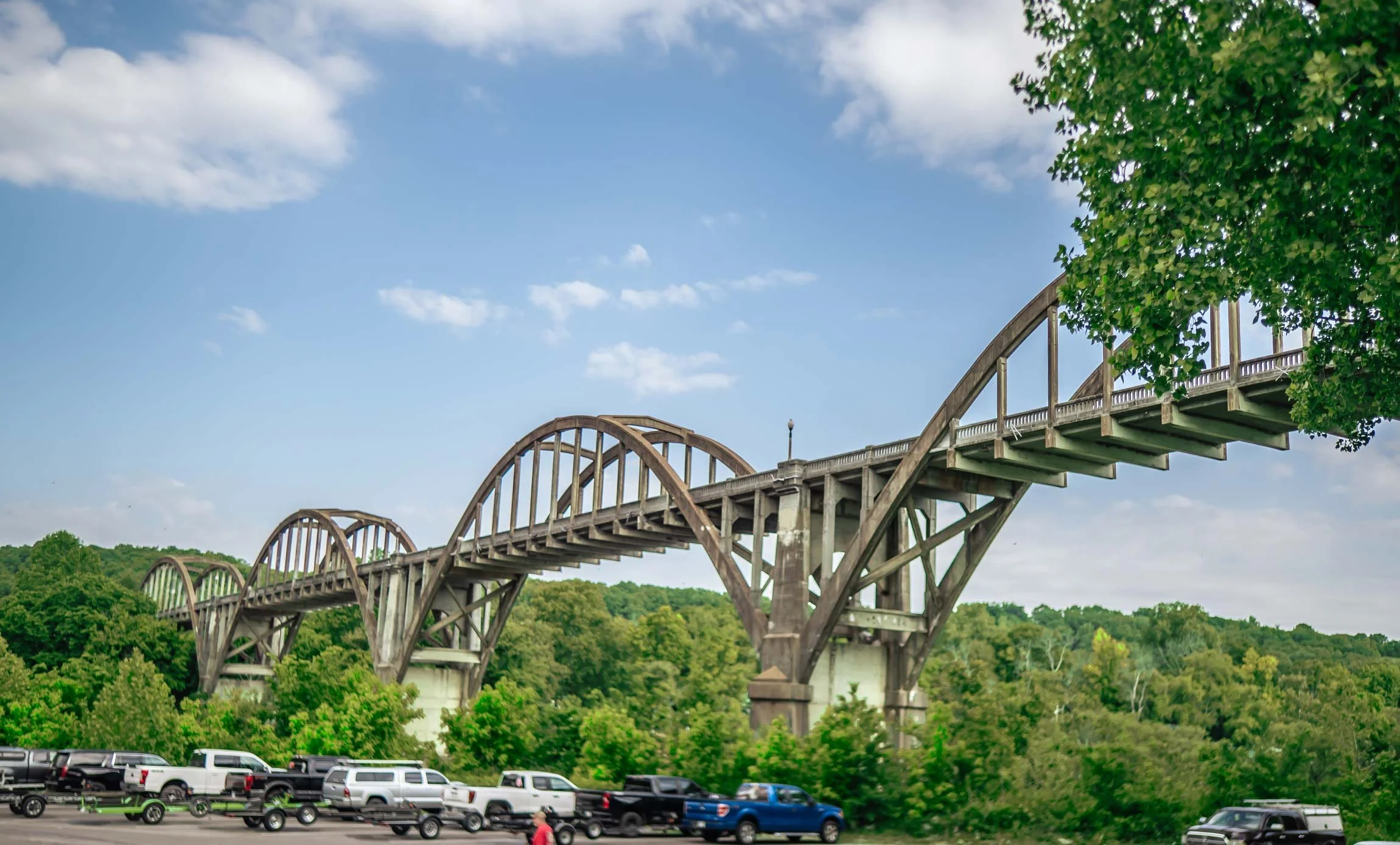
The R. M. Ruthven Bridge (also known as “Cotter Bridge”), finished in 1930, arcs across the White River in five graceful concrete spans. It is the largest Marsh Rainbow Arch bridge known to survive anywhere, listed on the National Register of Historic Places, and the first landmark in Arkansas named a National Civil Engineering Landmark. Come December, it glows with holiday lights over the water.
“A river town remembers where it came from.”
Walk down to Big Spring Park beneath the bridge and you'll find the Anglin-Tinnon Railroad Workers' Memorial, two old cabooses and a bronze conductor standing watch over the history they built. The park's walking trail follows the river upstream toward the Denton Ferry site, part of the Trail of Tears, a quieter and more solemn chapter in this land's long memory.